
Living up to the title, The Damned is tragedy personified, but the bleak extent of those doom-laden tones is remarkable, especially for Sixties cinema. There is scant hope in a world Bernard believes to be inevitably lost – for him, the future is set in stone; armageddon is not just a possibility but imminent, radioactive children being the only insane option for the survival of the human race.
The characters’ impending demise is foreshadowed throughout: Bernard tells Freya if he was to reveal his secrets he “might be condemning you to death”; in a brief moment of peace, Joanie reveals that she “never found this kind of quiet before – it’s as though I’m no longer afraid of dying.” Little quarter is given to hope; the most these people aspire to is a nobility in resolve to their fate.


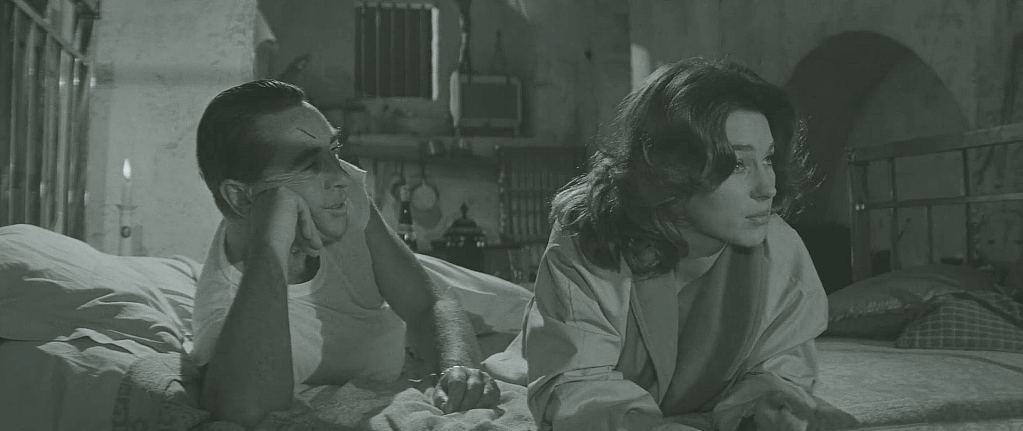
Such aspirations reveal an angry heart within the black subject matter. These hopeless relationships reflect the primary themes of the movie; all are polar opposites, a continual clash between old and young, control and freedom.
Although such old man/young girl romances were commonplace in Sixties cinema, the generation gap between Simon and Joan is repeatedly highlighted as being inappropriate, even grotesque; their love is doomed from the outset. Likewise, Freya and Bernard are so diametrically opposed in political/social views that any romance will always be fleeting. King’s obsession with Joanie is incestuous – she believes he’s never been with another woman and seeks comfort in his control over her. These characters are living to die while dying to live.
The children are being groomed for a future already decided for them by a generation which would rather give up and destroy the world than attempt to heal it. The old don’t understand the ability to change, the young are not given the chance to. The youth want freedom, but don’t know what to do with it; the old are scared of a youth they cannot control.


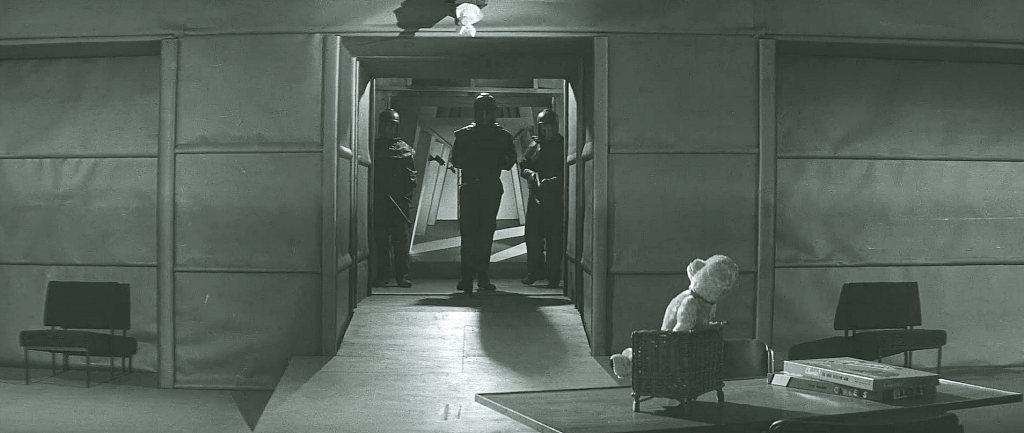
American director Joseph Losey had been forced to move to England after being blacklisted in the HUAC McCarthy witchhunts due to staunch Communist sympathies. His anti-authoritarian background provided a fierce stance on the material, while a keen visual eye elevated the budget with elegant widescreen compositions, imbuing the movie with arthouse class. Losey would find success with a trio of Harold Pinter adaptations, most notably The Servant (1963) with Dirk Bogarde, while The Damned was relegated to minor curiosity.
It is a rebellious, oddball work, defiantly adult and difficult to categorise. Although filmed in 1961, it took two years to be released, both Hammer and Columbia struggling to market such dark material within conventional genre norms. In America it was cut drastically down to a truncated 77 minutes. The problem wasn’t particularly sex, violence or gore, but an atmosphere of dread so deeply ingrained into the celluloid DNA it was impossible to lighten for the mainstream.
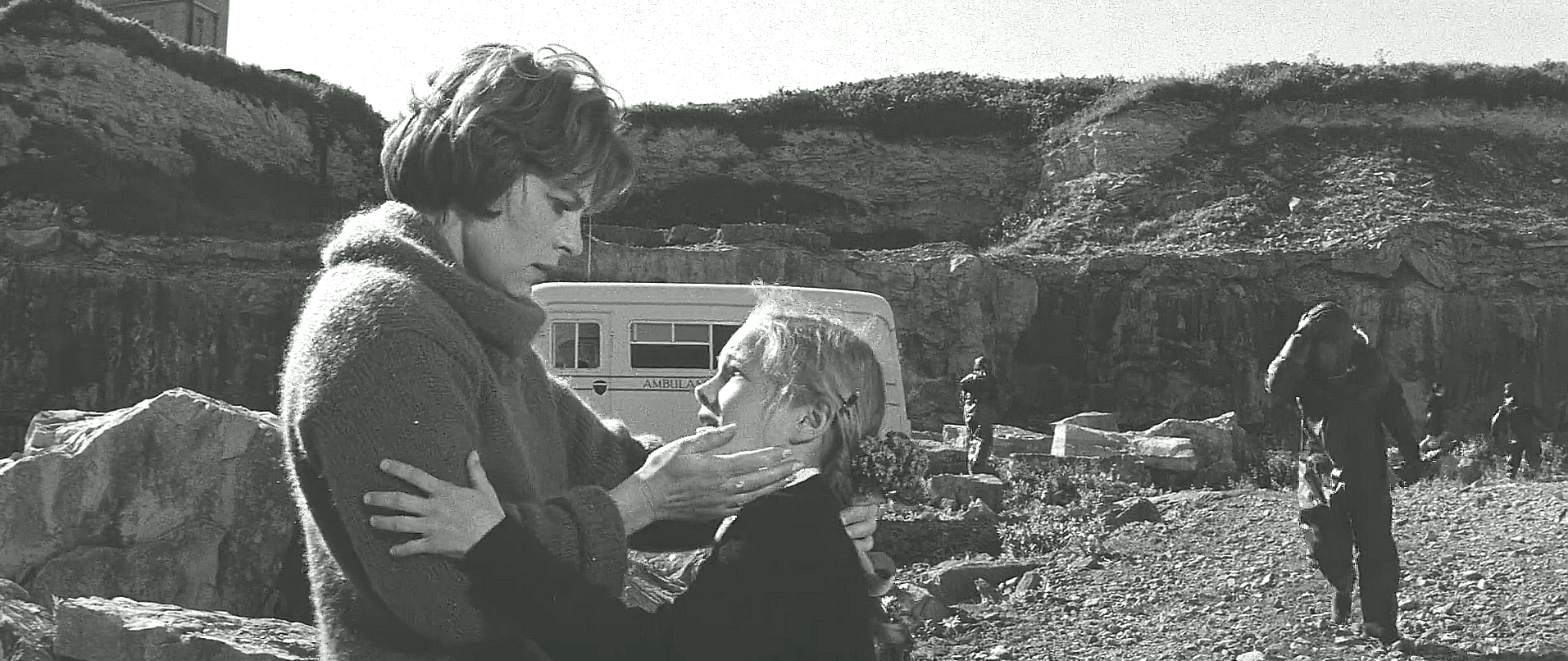
However, that off-key dark tone, so difficult for the time, has meant the movie has aged remarkably well. Clashes between generations and fighting for freedom against a controlling establishment are themes just as pertinent now as they were sixty years ago. The bleakness of the final moments – a military helicopter coldly watches lovers dying below, while imprisoned children scream for help, cries unheard by an oblivious world – feel eerily realistic and modern.
The universal truth of the title is that by damning others to an immutable fate, so too we damn ourselves. Unfortunately for the human race, such behaviour has never gone out of fashion.


 Hove Press