
“Brother, you take the prize. that’s the weirdest line for getting into my pants that I’ve ever heard…”
Maggie (Brie Howard), a savvy fugitive on the run, swiftly rebukes creepy mad scientist Dr Daniel (Klaus Kinski) when he reveals his plan to use the young woman to stimulate his latest robotic creation into life. In the far flung future of 2036, in the depths of space, technology may have evolved but men haven’t.
Sexual politics, social interaction and what it means to be human are under the microscope in Aaron Lipstadt’s Android – a lost, low budget sci-fi gem from the Eighties that is a beautiful example of limited resources and narrow focus reaping rewards a bigger budget and broader scale may obscure. It is a classic in miniature – slight in length and scope, but overflowing with charm and warmth all too rare in genre cinema.
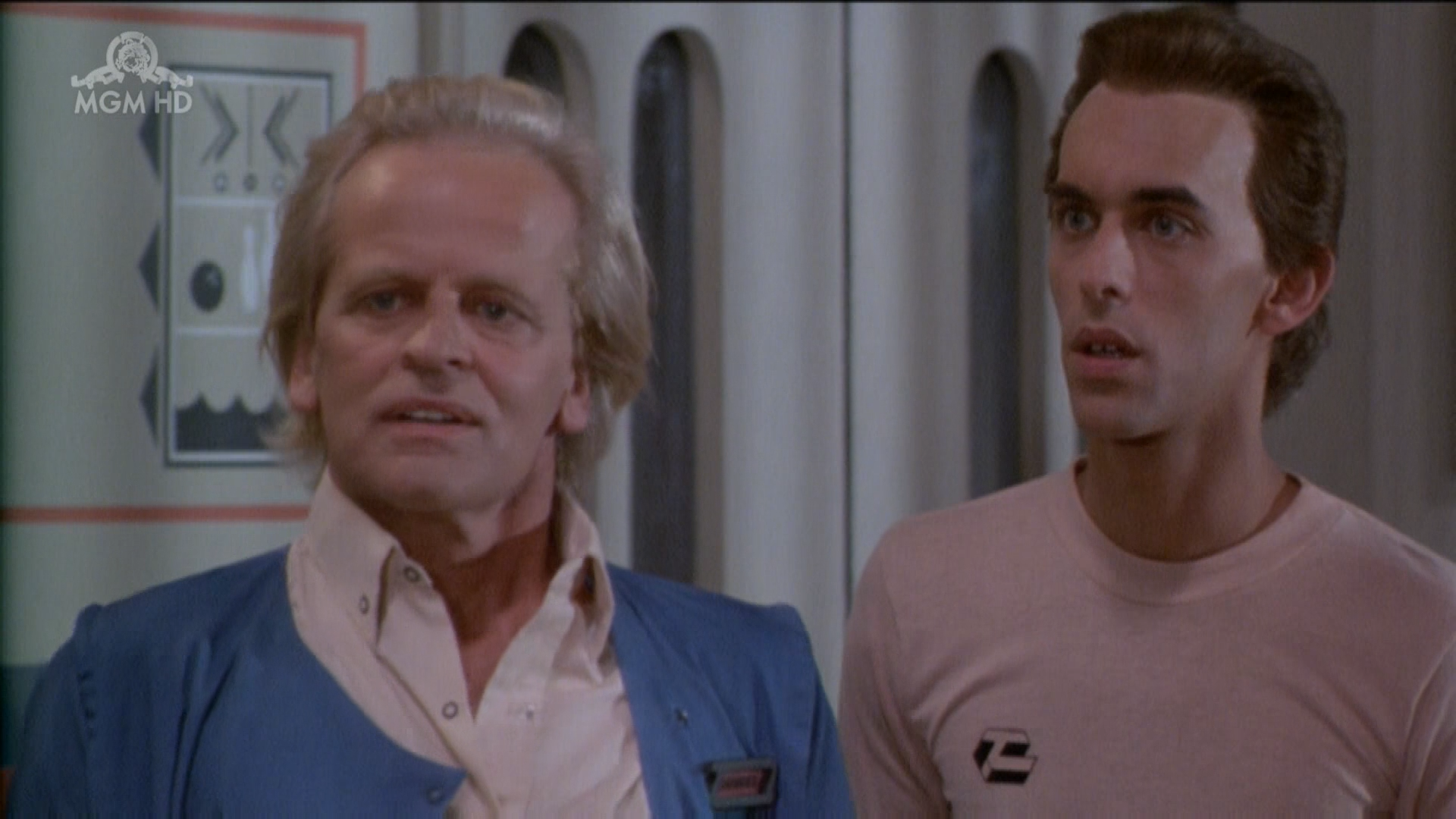
Max 404 (Don Opper) is lonely and bored. His life as menial assistant to harsh boss Dr Daniel on remote space station ULC53 reaps little joy. He seeks solace in video games, old 20th century black and white movies, pop music and sexual instruction tapes. These two sole residents of the station are employees of the nefarious Terra Corp, working on the secretive Cassandra Project in the arse end of the galaxy. “As usual there is nothing to report”, he says, logging another day of drudgery.
The illegality of the work, as robotic research has been outlawed after the violent Munich Rebellion, accounts for the isolation. Max has been there five years and seven months and, as he is an android, most likely his whole life. The opening credits show him working on a robot doll, female companion to the male version, neatly encapsulating all his dreams. He is a teenager, horny with no-one to play with, innocent of the wiles of mankind, desperate for love.
It is no surprise his response to an urgent distress call from an approaching ship is one of joy – “this is fantastic!” Unfortunately, the ship has been hijacked by three violent convicts on the lam, killing their prison wardens and assuming their identities. However, it is also perfect timing for the bad doctor, as the research project so near to completion has been terminated by his big bosses, which will also mean the termination of Max as well. Luckily, one of the fugitives is a woman…
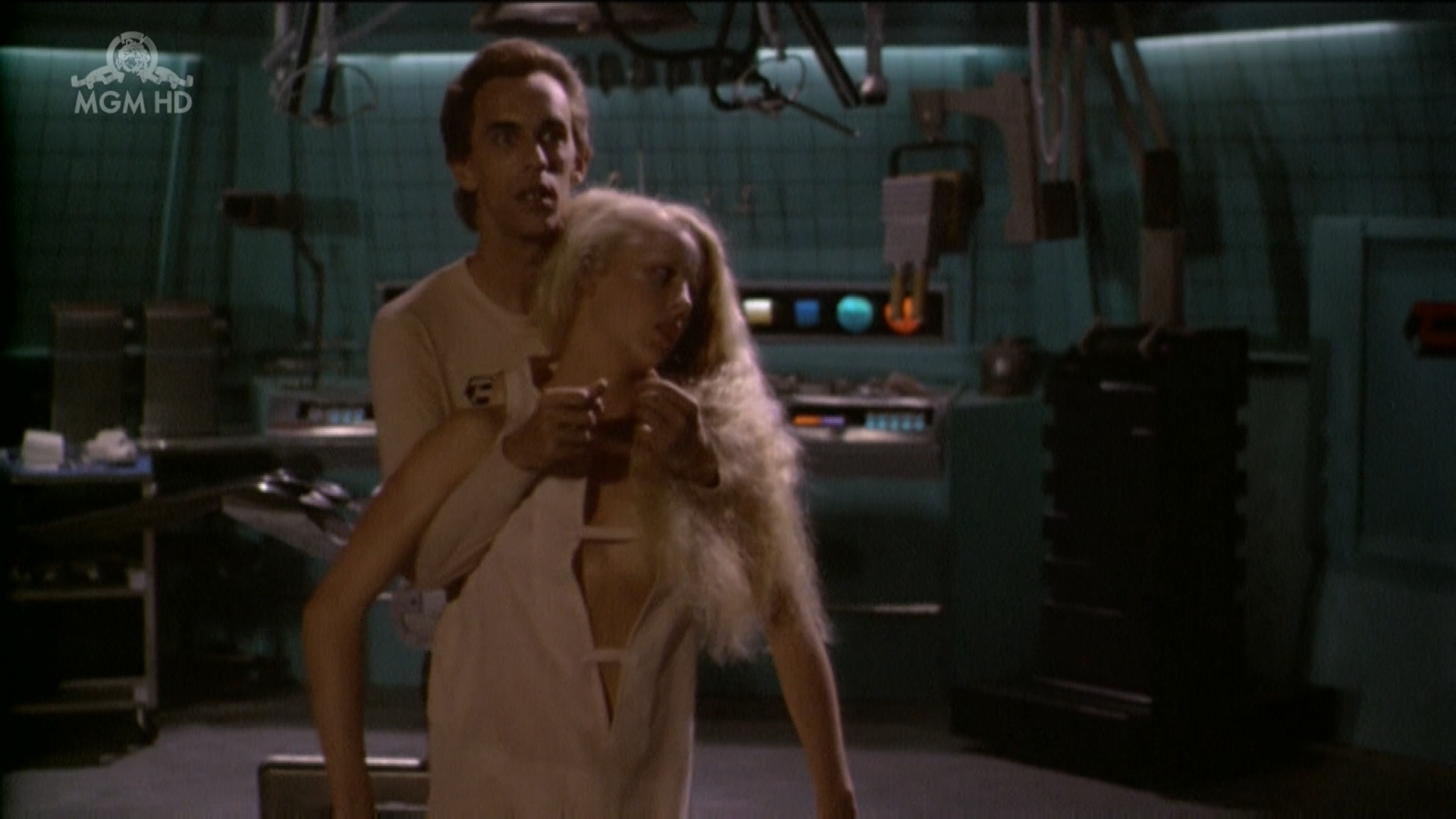
The heart and soul of the movie lies in the character of Max. It is a totally committed performace from Don Opper, one of laser focus which filters throughout the movie – he is even listed in the credits and advertising as Max 404. Whether it is impersonating Jimmy Stewart and Humphrey Bogart (he watches ‘It’s A Wonderful Life’ and has a Casablanca poster in his quarters) or copying kissing techniques from computer graphic simulations, with his bad hair (revealed to be all too fake wig) and bony frame this geek with a heart of gold ia an utterly beguiling creation.
He is the one centre of decency in the tale. No wonder female fugitive Maggie falls for his endearing nature. His childlike sense of wonder is tempered by an innate belief in doing the right thing. This makes his brief transformation into programmed killing machine all the more chilling. He is better than human, as the other examples of mankind exposes all our obvious flaws (greed, violence, petty jealousy). The three criminal antagonists are drawn with the same economy (the bully, the brain and the babe) that permeates throughout, but they are still believable characters that work outside their cliched roles. This is a truly minimalistic film, but one that uses such tightness as a strength.
It is a case of necessity being the mother of invention. Android was a New World Studios production, Roger Corman’s cheapskate 80s stable, and the King of the B’s was never going to spend an extra dime without a string attached. The sets and effects were rehashed from other sci-fi flicks of the era (Galaxy of Terror, Forbidden World) and the movie is plainly shot – no time for fancy lighting on a four week shot. But it works perfectly, being designed within those limitations so as not to expose them.
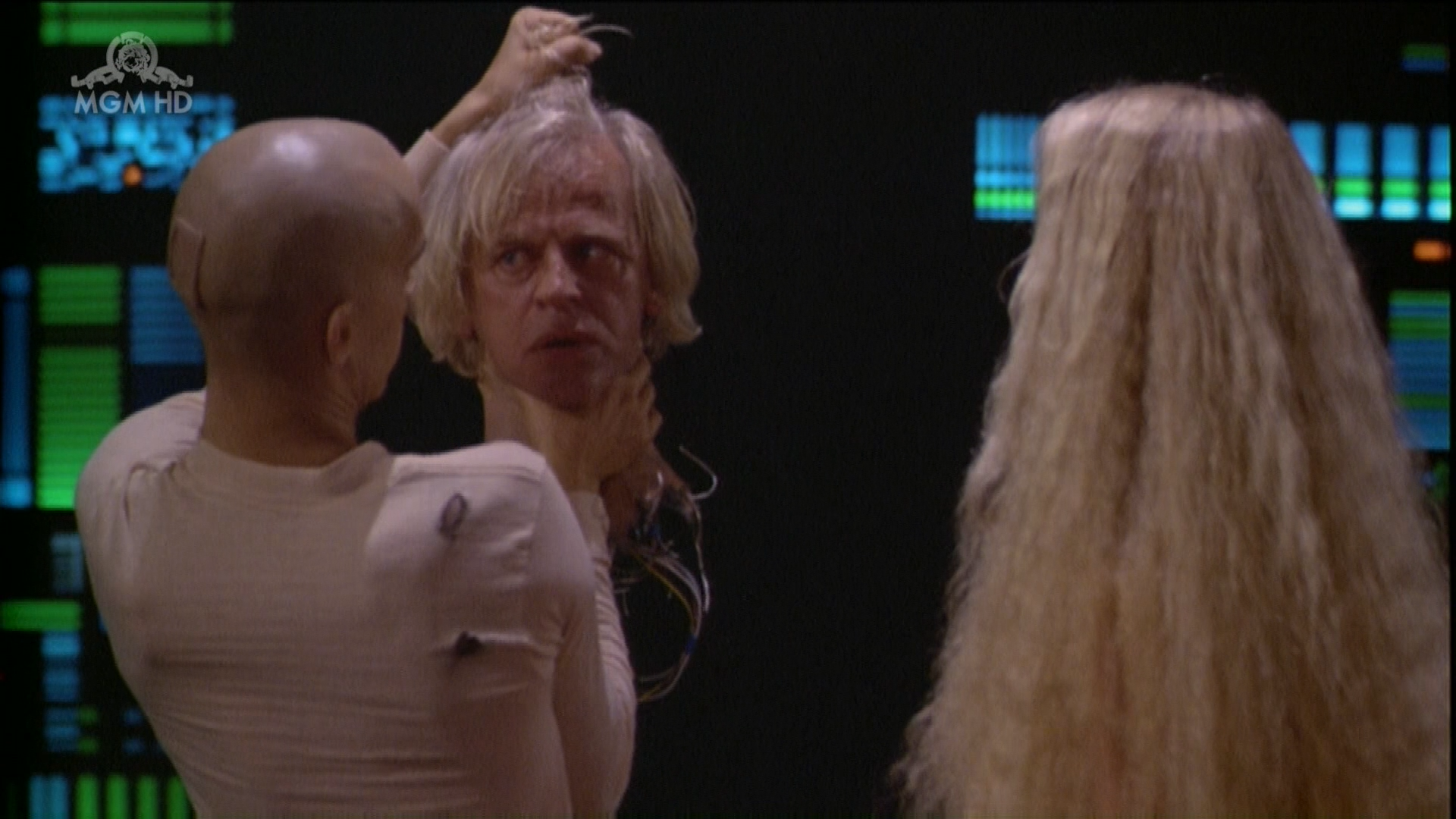
However, Android is a very different electric kettle to its darker, more graphicly violent peers. Such ingrained deft charm was pretty much the polar opposite to the multitude of Alien rip-offs being churned out, so the promotion as a dark futureshock thriller was doomed. It was a film even Corman couldn’t exploit. Despite enthusiastic reviews it never broke out of the box it was sold in. Android is a movie that everyone who saw loved, but simply not enough people got a chance to see.
Sadly, such small-scale cult success leaked over the careers of the main players. Both star and director never really fulfilled the potential and skill they displayed here. Don Opper worked his way through a career of minor bit roles, most famously as redneck turned alien assasin in Critters (1986). Aaron Lipstadt directed one more action-oriented B-movie, City Limits (1985), written with Opper, before descending into the steady production line work of network television.
Perhaps it is fitting that such a slight whimsical chamberpiece should leave only faint legacy – the true mark of a cult movie, influential to those who remember it, featherweight to those who don’t. While too limited to be anything more than a minor footnote in cinema fantastique, Android nevertheless stands out as a beautiful reminder that the smallest flame can still generate incredible warmth.

Android (1982) (r/t: 76 mins)
(Don Opper, Klaus Kinski) (d. Aaron Lipstadt)
“He learns to love, he learns to kill… Android becomes man.”


 Hove Press